


Step back into the early days of the Perth Hills at Kalamunda History Village, a charming open-air museum tucked right in the heart of Kalamunda. Managed by the Kalamunda and Districts Historical Society, it is the largest folk museum in Western Australia and offers a fascinating glimpse into the unique hills life, industries and everyday stories that helped shape the district.

The village sits on the site of the old Upper Darling Range Railway Station, which was built in the 1890s to service the famous Zig Zag line. This line once transported timber from Canning Mills to the main line at Midland Junction, and the original railway stations and platform are now listed by the National Trust. For anyone who enjoys local history, old buildings, rail heritage or simply a gentle wander with plenty to look at, this is a lovely place to spend a couple of hours.

Entry is through the Zig Zag Cultural Centre, where admission is paid at the Visitor Centre before heading into the village. From there, the museum opens out into a collection of relocated heritage buildings, vintage vehicles, railway displays and recreated domestic scenes. It feels like stepping into a little township from another era, with surprises around almost every corner.
One of the first things to catch the eye is Locomotive G118, a “G” Class locomotive of the type that once ran on the Kalamunda line, including the Zig Zag, during its 49 years of government ownership. Standing beside the old platform, it gives a real sense of how important the railway was to the development of the area, particularly for the timber industry.

The railway station buildings are a highlight too. The original railway station dates from 1903 to 1927, while a second station building represents the period from 1927 to 1949. Together, they help tell the story of transport in the hills, long before the area became the leafy residential and day-trip destination we know today.
The old Kalamunda State School House is another delightful stop. Dating from 1905 to 1970, it was the area’s first State school building. Inside, the classroom has been set up with wooden desks, old-fashioned teaching materials and a blackboard, and it is sure to spark memories for many visitors. It is also a great talking point if you are visiting with grandchildren, who may be amazed at how different school life once looked.

There are plenty of domestic scenes to explore throughout the village. McCullagh Cottage, built in 1895, is a settler’s cottage that gives a vivid impression of early family life in the hills. The rooms are small and simply furnished, with household items from the era helping visitors imagine what daily life would have been like without modern conveniences. Outside, the laundry area, copper, mangle and original-style dunny add to the atmosphere.

Chambers’ House, built in 1922, offers a different view of the past. It was originally built at 31 Railway Road by Mr Chambers for his daughters and was later moved to Kalamunda History Village in 1991. Today it is restored as a guest house from the 1920s to 1940s, a nod to the period when Kalamunda was a popular holiday destination for people from Perth and Fremantle. In the 1930s, there were 35 guest houses in the district, and this display captures that more genteel side of hills life beautifully.

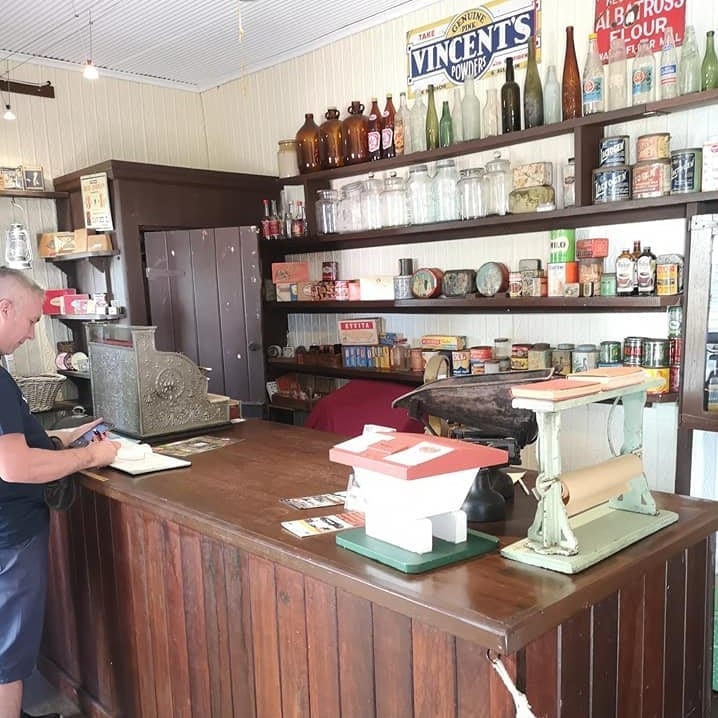
The village also includes two post office buildings. The original Post Office, which operated from 1901 to 1921, and the first official Post Office, which operated from 1921 to 1972, help show how communication developed in the district. Inside, you can see postal, telegraph and telephone displays, along with familiar old brands and objects that may bring back fond memories.

Transport lovers will enjoy the Carriage Shed, which houses a range of older transportation vehicles, including horse-drawn carriages and other pre-motor and early motoring displays. The Kalamunda Community Memorial Building also features a transport display and memorial wall, adding another layer to the village’s local heritage collection.

The Orchard Shed is especially relevant to Kalamunda’s story, as orcharding played such a significant role in the district’s development and continues to be part of the wider hills identity. The shed shows the evolution of the orchard industry, with machinery and displays that highlight the hard work behind fruit growing in earlier times.
There is also a blacksmith display, a sawpit like those used by pioneers of the timber industry, and a whim used in the early days for moving logs. The whim is on loan from the WA Museum, and it is a wonderful reminder of just how labour-intensive the timber industry once was.
Kalamunda History Village is run by dedicated and knowledgeable volunteers, and their care for the place is evident throughout. Group guided tours can be arranged by phoning ahead, which would be ideal for clubs, social groups or anyone wanting a more in-depth visit. Carers accompanying concession groups are admitted free, and bus parking is available on Williams Street.
The village is easy to combine with a wider day out in Kalamunda. After your visit, you can enjoy a stroll around town, stop for coffee or lunch nearby, or explore more of the Perth Hills. The museum is also close to another important local heritage site, Stirk Cottage, Kalamunda’s first heritage-listed cottage. Built in 1881, Stirk Cottage was the family home of early hills settlers Frederick and Elizabeth Stirk and their nine children. It is open on Sundays from 11am to 1pm for a gold coin donation.
For a relaxed outing with a strong sense of place, Kalamunda History Village is well worth a visit. It is nostalgic, informative and very easy to enjoy at your own pace. Whether you remember some of the items from earlier days, love heritage buildings, or want to introduce younger family members to the “olden days”, this Perth Hills treasure offers a warm and engaging look at Kalamunda’s past.

Kalamunda History Village
Address: 56 Railway Road, Kalamunda WA 6076
Opening hours: Monday to Wednesday and Friday, 10am to 3pm; Thursday, 12pm to 3pm; weekends, 10am to 4pm. Last entry is 30 minutes before closing.
Entry fees: Adults $11, concession $7, children over 5 $5. Entry fees apply.
Phone: 9293 1371
Website: kalamundahistoricalsociety.com









[…] Grandkids will be fascinated to hear all about school in the “olden days” at places like the Kalamunda History Village. Little fans of Thomas the Tank Engine will love to visit the old steam trains at the Rail […]